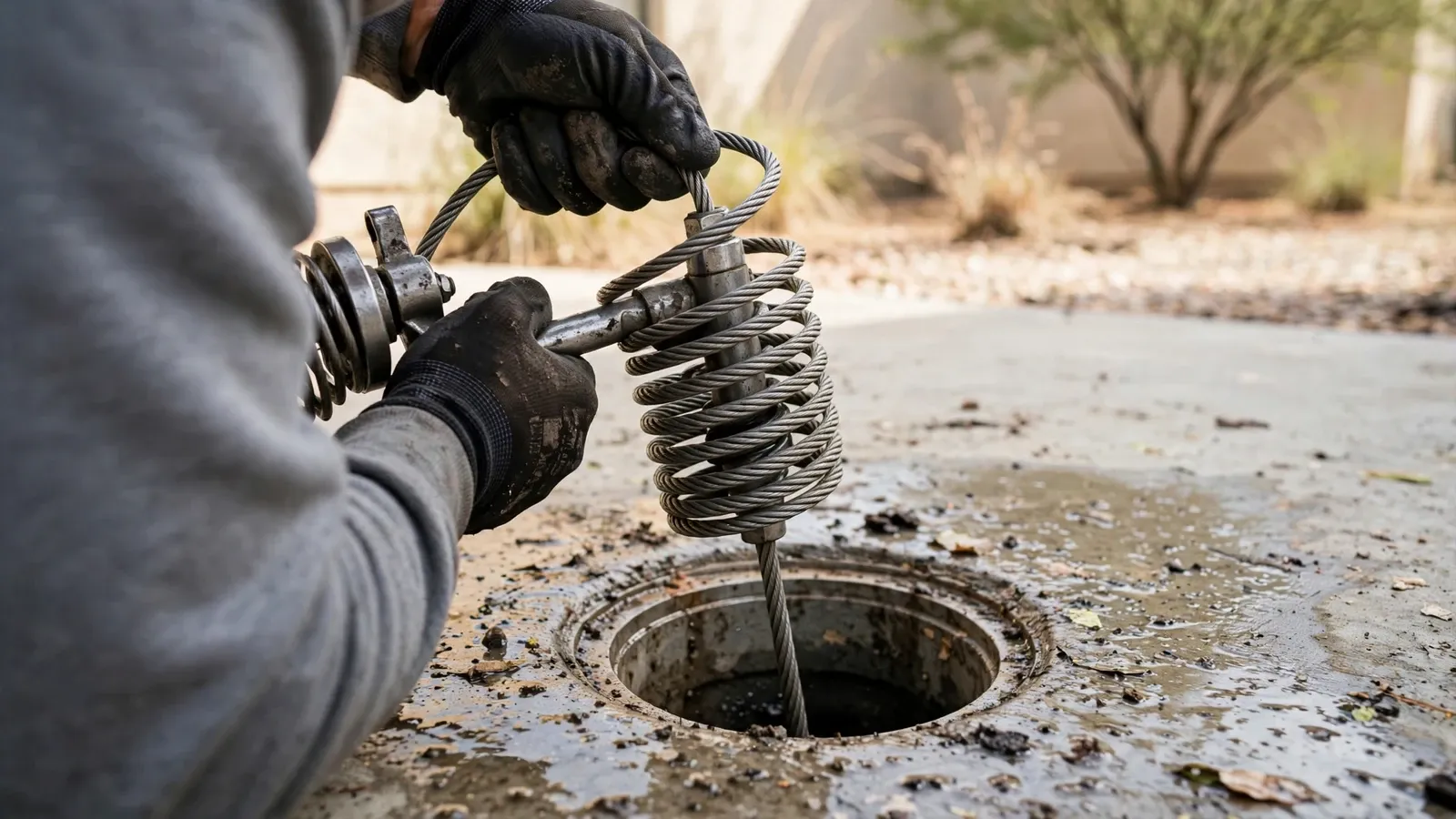
Bleach can disinfect a drain but it does not clear a clog
Bleach kills bacteria and helps with smells, but it does not dissolve hair, grease or paper. People pour it into clogged drains hoping for a fix and get a drain that is still clogged and smells of bleach. It is also hazardous when mixed with other cleaning products.
This guide explains what bleach does, the danger of mixing it and the better ways to clear a drain. If a drain is backing up and you are not sure what is in it, stop using water and call. See drain cleaning.
Safety steps before you pour anything
- Never mix bleach with ammonia, vinegar or other drain cleaners.
- Mixing can release toxic gases.
- Ventilate the area and leave if you smell fumes.
- Do not pour another product on top of bleach.
- Tell the plumber what you used.
What bleach does and does not do
| Goal | Does bleach help? | Better option |
|---|---|---|
| Kill odor causing bacteria. | Somewhat, with plenty of water. | Clean the trap and overflow. |
| Dissolve hair. | No. | Pull or snake it out. |
| Break up grease. | No. | Hot water, then cable or jetter. |
| Clear a main line. | No. | Cable and camera. |
| Disinfect a drain. | Yes, if used alone and diluted. | Rinse thoroughly afterward. |
Drain still clogged?
Stop adding products and call. A plumber can start the diagnosis today.
A better routine for a smelly or slow drain
These steps address the cause.
- 1
Clean the pop-up and trap.
Remove the stopper and clear the hair and film. This fixes most bathroom sink odors.
- 2
Flush with hot water.
Hot tap water, not boiling, moves light grease along.
- 3
Use a hand tool.
A plastic barbed strip or a small auger pulls hair out.
- 4
Call if it returns.
A clog that returns usually has a cause further down the line.
Is bleach bad for pipes
Occasional diluted use is unlikely to hurt modern plastic pipe, but regular strong use can degrade seals, rubber parts and some metal. Septic systems are especially sensitive, so if you are not sure whether your home is on sewer or septic, ask the city or a plumber before using any chemical.
The simplest rule is to treat bleach as a cleaner for surfaces, not a drain opener. For a stubborn clog, a cable or a jetter is safer for the pipe and for you. See hydro jetting for lines with repeat buildup.
Cleaning a smelly drain without chemicals
Most drain smells come from a thin film of soap, hair and food that builds on the pipe wall and the overflow channel. That film feeds bacteria, which produce the odor. Removing the film solves the smell, and bleach only masks it for a short time.
For a bathroom sink, remove the stopper, clean the pop-up rod and wipe the visible drain. Pour a kettle of hot, not boiling, water down the drain afterward. For a kitchen sink, run hot water and a little dish soap after greasy dishes. Baking soda and vinegar create a fizz that loosens light film, though they are not a substitute for mechanical cleaning.
A drain in a rarely used sink or floor drain can smell because its trap has dried out. Pouring a cup of water down it refills the trap and blocks sewer gas. If the smell returns, the cause could be a venting problem or a damaged line, which a plumber can check.
Safer products for routine upkeep
If you want a product for routine upkeep, enzyme-based cleaners are gentler on pipes and on people than caustic or acid products. They work slowly on organic film and are meant for maintenance, not for clearing a hard clog. Follow the label, use them overnight when the drain is unused and do not mix them with other chemicals.
No product replaces habits. Screens in the shower and tub, a lid on the grease can and a sink strainer in the kitchen catch most of what causes clogs. A few dollars of strainers prevent a surprising number of plumber visits.
Roy, UT local note: older drains and soil
Roy's housing grew from about 800 people in the early 1940s to about 24,600 by 1990, per the Utah History Encyclopedia, which means a mix of drain materials from cast iron to PVC. Older metal drains can corrode, and bleach does not help them. The soil in Roy is described as corrosive to metal in the city's 2024 water plan.
If your drain smells even after cleaning, the problem may be a dry trap, a vent issue or a damaged line. A camera look settles it. Our dispatch covers West Haven and Ogden as well as Roy.
Questions people ask
You can, but it is unlikely to clear the clog and it adds a hazard for the next person to open the drain. Mechanical methods work better.
No. Mixing bleach with ammonia or acidic cleaners can release toxic gas. Never combine products.
The smell usually comes from film in the trap or overflow, a dry trap or a venting problem. Cleaning the parts or calling a plumber addresses the source.
Bleach and other chemicals can harm the bacteria a septic system relies on. If you are unsure whether you are on sewer or septic, ask the city or a plumber first.