Active leaks and hidden leaks both need quick answers
If you can see water, shut off the main and call. If you cannot see water but your bill jumped, the meter spins with every fixture off, or a floor feels warm or damp, the leak is hidden and every day it runs costs money and risks mold and structural damage.
Our 24/7 line takes both kinds of call. A visible gush is a burst pipe emergency, while a hidden leak is often found in a scheduled visit with listening and imaging gear.
A two-minute test to see if you have a leak
Before you call, you can confirm whether the leak is real and which side of the meter it is on.
- 1
Turn off every fixture.
Close faucets, stop the dishwasher and washer, and make sure the ice maker and any irrigation are not running.
- 2
Read the meter.
Find the meter, usually near the street or in a box by the property line. Note the reading or watch the small leak dial.
- 3
Wait fifteen minutes.
Do not use water. Check again. If the dial moved, water is moving somewhere.
- 4
Close the main and recheck.
If the dial stops after you close the main shutoff in the house, the leak is inside. If it keeps moving, it is on the line between the meter and the house.
The city generally maintains the line up to its meter. The line from the meter into your house is typically the homeowner's responsibility. Call us if you are unsure.
Meter moving with everything off?
Close the main and call. A leak is easier to find the sooner it is checked.
What a plumber uses to trace a hidden leak
Finding a leak without tearing out walls is the point of leak detection.
Acoustic listening.
Sensitive microphones pick up the sound of water escaping from pressurized pipe.
Thermal imaging.
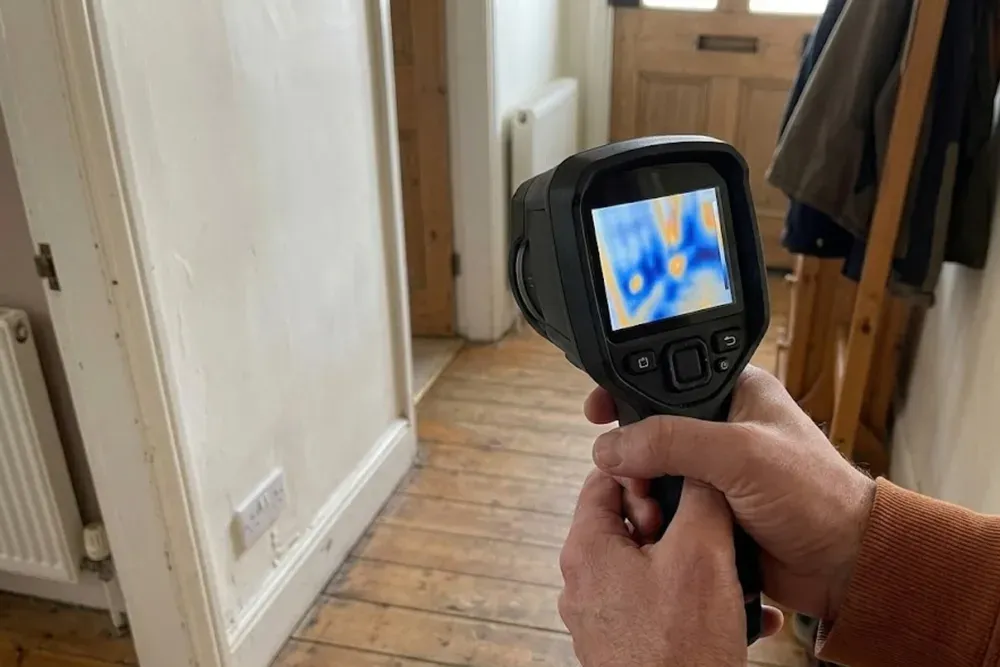
A thermal camera shows the temperature difference where hot lines leak into slab or wall cavities.
Pressure testing.
Isolating sections of line and watching pressure helps narrow a leak to one zone.
Moisture meters.
Readings on drywall, subfloor and baseboards show where water has traveled.
No single tool finds everything. The plumber chooses the combination that matches your symptom, then confirms before opening anything.
What common signs usually point to
| What you notice | What it often means | Next step |
|---|---|---|
| Water bill much higher than usual. | A running toilet, irrigation leak or hidden line leak. | Do the meter test above. |
| Warm spot on a slab floor. | A hot water line leaking beneath the slab. | Close the water heater supply and call. |
| Musty smell or stained ceiling. | A slow leak in a supply or drain line above. | Photograph the stain and call. |
| Sound of running water in a quiet house. | A leak on the pressurized side. | Shut off the main and call. |
Why Roy homes see pinhole and fitting leaks
Roy has a broad mix of homes from the 1940s to today. Older galvanized and early copper lines can develop pinholes as the inside corrodes, and some late 1970s to mid 1990s homes carry polybutylene supply pipe that is prone to failing at fittings. Matching the pipe type to the symptom is half of finding the leak.
The city's water plan reports delivery pressure of 60 to 90 psi. That is a comfortable range for taps but a heavy load on a worn line. If pressure is on the high end, a regulator reduces stress on pipes and fixtures, and it is worth checking even after a leak is fixed.
Habits that reduce leak damage
You cannot stop every leak, but you can limit what one does.
- Find your main shutoff now and test that it turns.
- Check under sinks and behind toilets twice a year.
- Replace rubber washing machine hoses before they fail.
- Look at the water heater base each month.
- Watch your meter dial after a long trip or vacation.
What decides the price of finding a leak
Some policies cover the cost of finding a leak that caused covered damage, and others do not. Ask your insurer before work begins.
Where a found leak leads next
Once a leak is located, the repair depends on the pipe. A split line is covered on the burst pipe page, an aging system may point to repiping, and a leak under a toilet is usually a job for toilet repair. We handle these calls across Roy and in Layton. Wet spots in yards, as in Eagle Lake, can be irrigation, so a meter test helps first.
Questions about leak detection
Often yes. Listening gear, thermal imaging and pressure tests narrow a leak to a small area before anyone opens a wall. In some cases a small access opening is still needed to confirm.
The city is generally responsible up to its meter. The line from the meter into the house is typically yours. The meter test on this page tells you which side the water is moving on.
Homeowners policies vary on sudden versus gradual leaks. Photograph everything and ask your insurer before repairs, so you know what documents they need.
The plumber uses the tools above to locate it, explains what has to be opened and gives you a price before work starts. You decide whether to proceed.