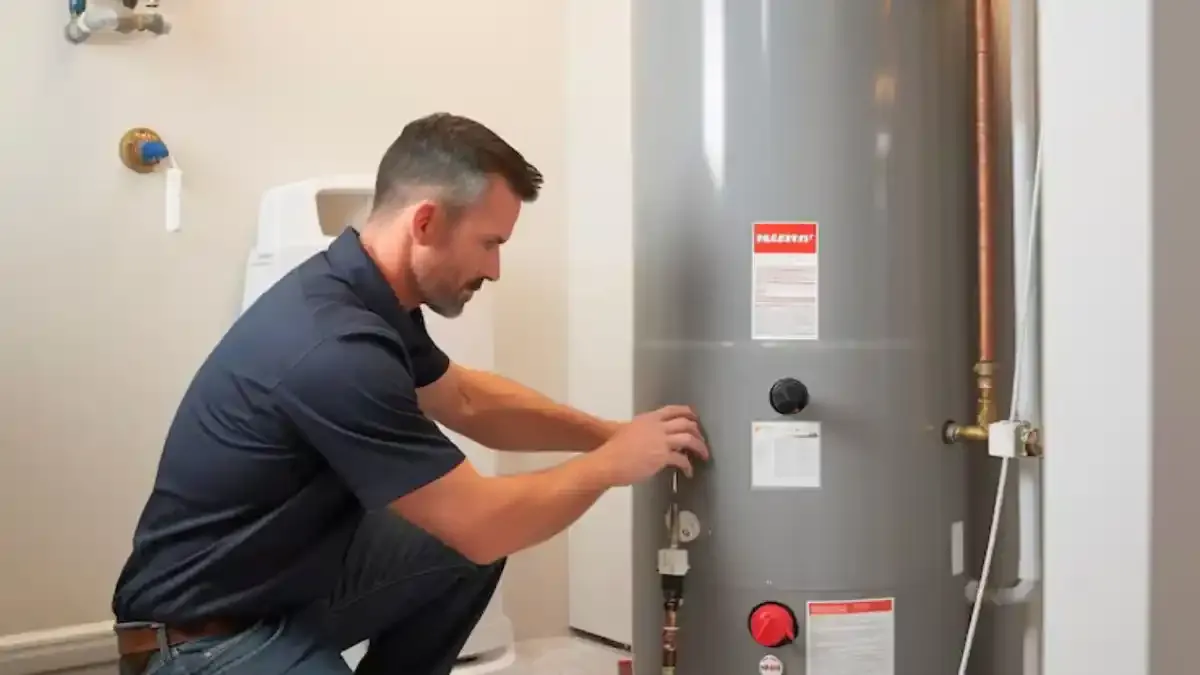
A leaking tank is an emergency replacement call
When a tank leaks from the shell, repair is not possible. Water is escaping through a rusted seam or a failed liner, and the leak only grows. Shut off the cold supply valve above the tank, turn the gas valve to pilot or the breaker off, and drain nothing until a plumber arrives unless water is running toward finished floors.
We take these calls 24/7. Tell us the tank size from the label if you can read it, and whether the unit is gas or electric. That lets the plumber bring the right replacement on the first trip when stock allows.
From the call to hot water again
Replacement is one of the more predictable jobs in plumbing, which is why the price can be clear before work starts.
- 1
Confirm the unit and location.
Fuel type, tank size, venting and where it sits all affect which water heater fits and what the install needs.
- 2
Present options and price.
You see a clear price for the size that fits your household, and the plumber explains the difference between standard and higher-efficiency units.
- 3
Drain, remove and install.
The old tank is drained and removed. The new one is set, connected, vented or wired to code and fitted with a new relief valve and discharge line.
- 4
Test and walk through.
The plumber checks for leaks, exhaust draw on gas units and temperature, then shows you the shutoff and the settings.
Planned replacements, before a failure, are covered on our water heater installation page.
Tank down and water everywhere?
Shut off the supply and call. Replacement can start the same day when available.
How household size relates to tank size
Use this as a general guide. The plumber looks at your actual hot water habits before recommending a size.
| Household | Tank size often used | Notes |
|---|---|---|
| One to two people. | 30 to 40 gallons. | Short showers and small laundry loads. |
| Three to four people. | 40 to 50 gallons. | The most common size in single-family homes. |
| Five or more people. | 50 to 75 gallons. | Check the recovery rate as well as capacity. |
| Large tubs or heavy use. | Higher capacity or tankless. | Peak demand matters more than daily use. |
An oversized tank costs more to heat and an undersized one runs out. Getting the size right is a design choice, not a guess.
The two replacement paths
Most homes in Roy still use storage tanks, but tankless is a real option when the gas supply and venting allow it.
Standard tank
- Lower upfront cost and simple installation.
- Keeps a reservoir of hot water ready.
- Standby heat loss runs all day.
- Typical for replacement in the same location.
Tankless
- Heats water on demand, so supply does not run out.
- Needs adequate gas line and venting, sometimes upgrades.
- Scale in hard water calls for periodic flushing.
- Details on the tankless page.
What Roy water does to a new water heater
Roy City draws on its own wells and buys treated water from the Weber Basin Water Conservancy District, and the city's 2024 conservation plan describes delivery pressure between 60 and 90 psi. High pressure is a common reason relief valves weep and tanks age early. An expansion tank is often part of a good installation in a closed system.
Weber Basin's water quality report lists hardness of 10 to 18 grains per gallon. That is hard water, and it leaves scale on elements and tank bottoms. Ask about the anode rod and about flushing intervals, and consider softener sizing if scale is a recurring complaint.
How to prepare for replacement day
A little preparation makes the visit faster.
- Clear a path to the water heater and the area around it.
- Know where the water shutoff and the breaker or gas valve are.
- Move stored items away from the tank.
- Tell the plumber about any past issues with venting, noise or drains.
- Plan to be home, since a code-compliant install includes a walkthrough.
What decides the price of a replacement
Insurance may help with water damage from a burst tank, but the replacement tank itself is usually your cost.
What to do before help arrives when a tank is leaking
Hot water and electricity or gas call for care.
- Close the cold supply valve above the tank.
- Turn a gas unit to pilot or off, or switch an electric unit off at the breaker.
- Do not touch the tank or the discharge pipe, since the water can be very hot.
- Keep children and pets away from the area.
- If you smell gas, leave the building and call the gas utility or 911 first.
Where we replace water heaters
Replacement calls come from Roy and from Ogden, where older homes often carry older tanks. The Layton page covers the local water that affects tank life there. Questions about aging tanks come up often in Midland, where homes date from the 1980s onward.
Questions about water heater replacement
When a unit is in stock, replacement can usually be done in one visit after the plumber arrives. Availability depends on the size and type, so call and describe what you have.
Ask how disposal of the old tank is handled when the plumber gives you the price, so there are no surprises on the day.
Water heater replacement often requires a permit or inspection under local code. Ask the plumber how it is handled for your address, and check with Roy City if you want to confirm the requirement yourself.
Often yes, but the gas line size, venting and electrical needs have to match. The plumber checks these first. See tankless water heaters.