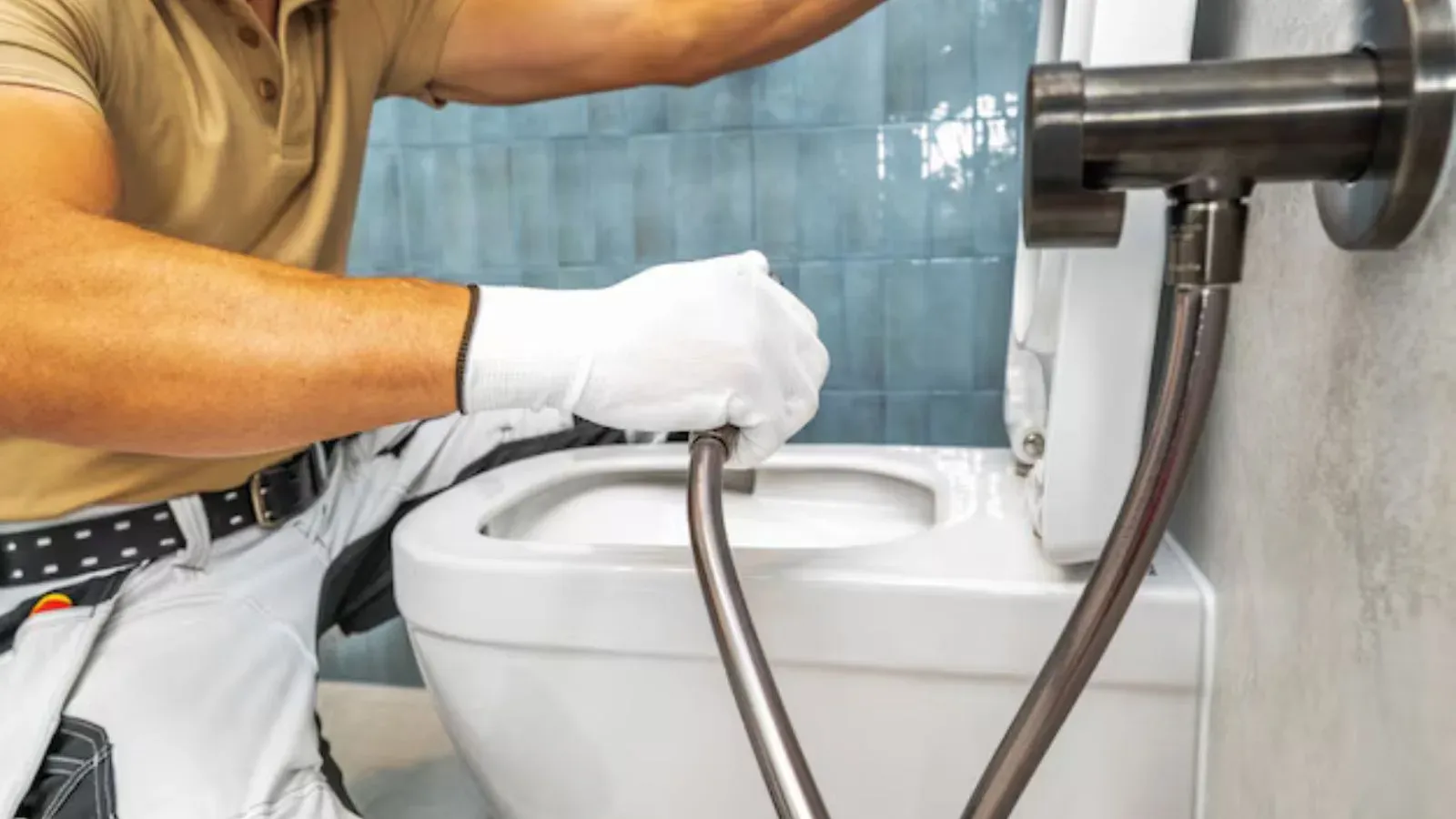
A toilet that leaks usually leaks from one of four places
A puddle around a toilet is not always the toilet. It can be the supply line, the tank, the base seal or condensation. Finding the source takes five minutes with dry paper towels and is worth doing before you call, because it decides the repair.
If water is spreading, close the supply valve behind the toilet and call. For the service, see toilet repair and installation.
Five minute leak hunt
Dry everything first.
- 1
Dry the toilet and floor.
Wipe the tank, supply line, valve and base until completely dry.
- 2
Check the supply connection.
Press a paper towel at the valve and line connection. Wetness there points to a loose fitting or worn washer.
- 3
Check the tank bolts.
Look at the base of the tank. Drips around the bolts mean worn washers.
- 4
Check the base.
Wetness at the base after flushing means the wax seal or flange has failed.
A tank that sweats on a humid day is condensation, not a leak.
Source and fix
| Where the water shows | Likely cause | Fix |
|---|---|---|
| Supply valve or line. | Loose nut or worn washer. | Tighten or replace the line. |
| Tank bolts. | Worn rubber washers. | Replace bolts and washers. |
| Tank to bowl joint. | Failed tank gasket. | Replace the gasket. |
| Base of the bowl. | Failed wax ring or flange problem. | Reset with a new seal. |
| Inside bowl without flushing. | Worn flapper. | Replace the flapper. |
Water at the base?
Close the valve and call. A plumber can start the diagnosis today.
What failure at the base means for your floor
A base leak is the one worth acting on quickly. The wax ring seals the toilet to the drain flange. When it fails, water seeps under the toilet and into the subfloor, where it can rot wood over time without ever forming a visible puddle. Soft flooring, a rocking toilet or a musty smell are late signs.
Replacing the seal means pulling the toilet, checking the flange and resetting it. If the flange is broken or the subfloor is soft, that needs repair first. The plumber will explain what was found and give a price before work continues.
Keeping a toilet from leaking again
A little care helps.
- Do not over-tighten bolts, since porcelain cracks.
- Replace supply lines every several years.
- Check the flapper annually.
- Keep the area dry and wipe condensation.
- Act on a rocking toilet right away.
Parts worth replacing together
When a toilet is already apart for a new seal, a few inexpensive parts are worth changing at the same time. New closet bolts keep the toilet from rocking. A new supply line removes a connector that may be years old. A fresh fill valve and flapper restore the tank to like-new function and prevent the next call.
Check the flange as well. It is the ring on the floor that the toilet bolts to, and it must sit level with or slightly above the finished floor. A cracked or sunken flange cannot hold a seal even with a new wax ring, and the toilet will leak again. Repair rings and flange extenders exist for this.
If the toilet has leaked for a while, check the floor around it. Soft vinyl, dark stains, a spongy feel or a musty smell all suggest water reached the subfloor. A plumber can point out what to look at, and a flooring or carpentry trade repairs the damage. Early action usually keeps that repair small.
When to call right away
Call quickly if water keeps appearing after you have dried the base, if the toilet rocks, if the floor feels soft or if you see staining on the ceiling below. Those signs suggest water has reached the subfloor and may be moving beyond the bathroom.
Close the supply valve while you wait. Keep the area dry with towels, and avoid using the toilet until it is fixed. A plumber can reset the toilet, check the flange and tell you whether the floor needs attention from another trade.
Roy, UT local note: pressure and toilet parts
Roy City's 2024 water conservation plan describes delivery pressure of 60 to 90 psi in three pressure zones. Pressure near the top of that range puts more stress on fill valves, supply lines and tank seals, so toilets in higher pressure zones may need parts replaced sooner. A gauge on an outdoor spigot shows your own pressure.
Weber Basin's published water quality report lists hardness of 10 to 18 grains per gallon for the water it supplies, and Roy blends sources. Mineral scale can keep a flapper from sealing, which makes a toilet run. Neighbors in Clearfield and Ogden see the same Weber Basin water.
Questions people ask
Supply line and flapper fixes are within reach for many homeowners. Resetting a toilet for a base leak is heavier work and needs the right seal and a sound flange.
Water appears at the base after flushing, the toilet rocks, or the floor around it feels soft. Those signs together point to the seal.
Not always, but it should not wait long. A base leak can damage the subfloor. Close the supply valve if you are unable to get it fixed right away.
It can contribute. Roy's plan describes 60 to 90 psi, and the upper end wears seals faster. A pressure check helps if parts fail often.