Waterproofing is about directing water, not just sealing a wall
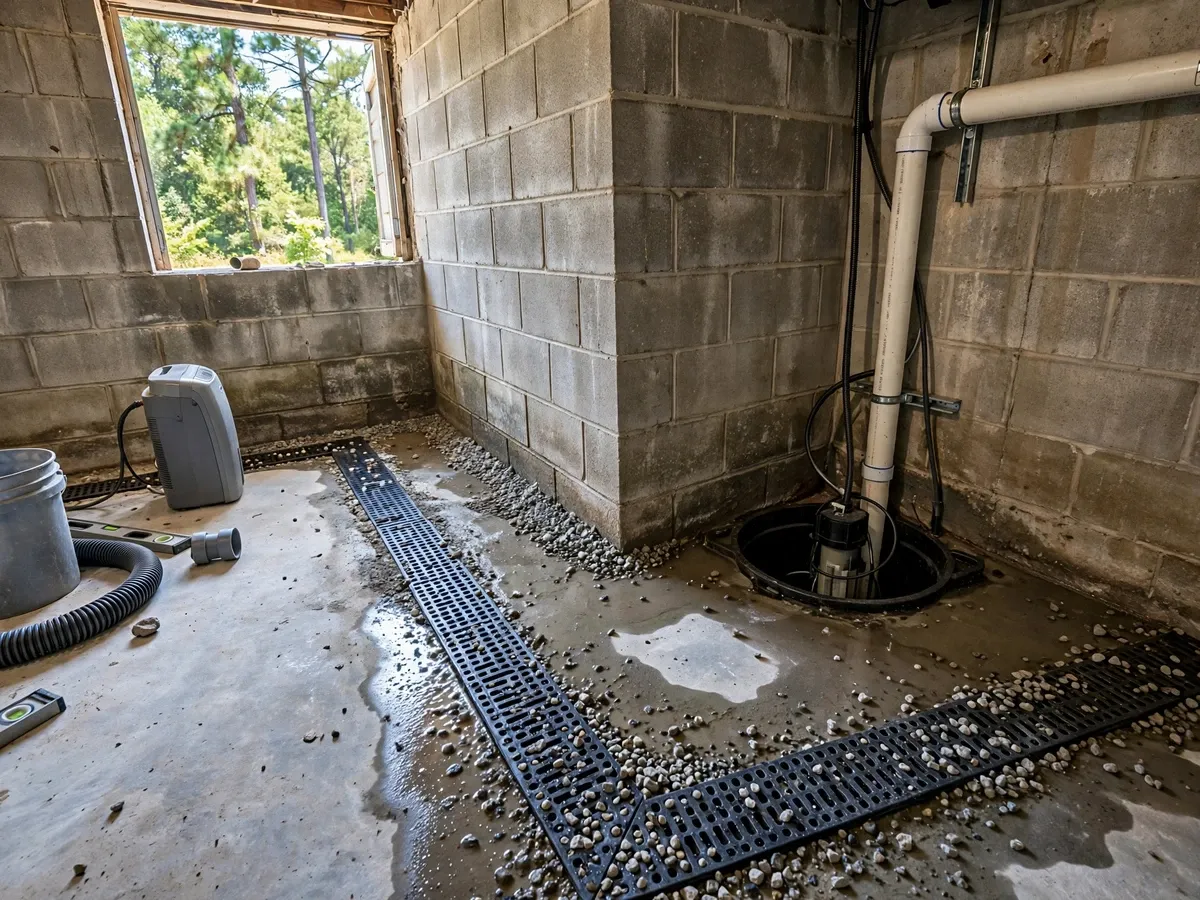
A damp basement is not always a leak. Often it is water that has nowhere to go, pushing through a wall or up through a floor joint. Sealing the inside surface may hide the problem for a while, but the water is still there. Real waterproofing manages the water, usually with drainage and a pump, and sometimes with exterior work.
We approach it honestly. Not every basement in Roy needs waterproofing, and a plumber is only one of the trades involved. We will tell you what we can address and when you need an excavation or foundation specialist.
Where basement water usually comes from
The source decides the fix.
Surface water.
Grading, downspouts and window wells that send rain toward the foundation. Often fixed outside the house.
Groundwater.
A rising water table pushes up through cracks and the floor-wall joint, especially in spring.
Plumbing leaks.
A leaking supply or drain line inside the wall or slab. See leak detection.
Condensation.
Humid air on cool surfaces, not a leak at all. A dehumidifier and ventilation help.
Identifying the source first prevents spending on the wrong fix.
How interior drainage is planned
Interior systems collect water at the floor and send it to a pit.
- 1
Assess and test.
The plumber checks where water enters, tests moisture and rules out plumbing leaks.
- 2
Design the drain path.
A channel along the footing collects water and carries it to a sump pit with a pump.
- 3
Install the system.
The floor edge is opened, drain pipe and gravel are placed and the concrete is patched.
- 4
Connect and test the pump.
The sump pump and discharge are installed and tested. See sump pump service.
Basement damp or seeping?
Call and describe where and when. A plumber can help sort the cause.
Common approaches compared
Each approach suits different problems.
| Approach | What it does | Limits |
|---|---|---|
| Exterior grading and downspouts. | Moves rainwater away from the foundation. | Does not help groundwater. |
| Interior drain and sump pump. | Collects water at the footing and pumps it out. | Water still reaches the wall. |
| Exterior excavation and membrane. | Seals and drains from outside. | Costly, outside plumbing scope. |
| Crack injection. | Seals individual cracks. | Does not address water pressure. |
Groundwater, canals and the Roy basement
Roy is near the Weber River and several irrigation canals, and the valley floor along the Wasatch Front can have a high water table, especially in spring. Local history includes a canal dug in 1882, which tells you how long irrigation has shaped the area. That does not mean every basement is wet. It means some lots are more likely to see groundwater than others.
The Roy Water Conservancy District supplies secondary irrigation water to many yards. Overwatering near the foundation, clogged downspouts and sloping grades can create wet basement walls that have nothing to do with groundwater. A plumber and a grading check are often the first steps.
Low-cost checks before major work
Many damp basements improve with simple changes.
- Extend downspouts several feet from the foundation.
- Slope soil away from the house.
- Keep sprinklers from soaking the foundation wall.
- Clear window wells and make sure they drain.
- Run a dehumidifier if the air is humid but walls are dry.
What decides the price of waterproofing
Seepage is commonly excluded from standard policies. Ask your insurer what is covered before work.
What to ask a contractor before you sign
Waterproofing quotes vary widely because the scope varies. Ask where the water is coming from and how they know. Ask what happens to the water after it is collected, since a drain that ends nowhere is not a system. Ask for the pump size, the discharge location and what warranty applies in writing.
Be cautious of any quote that promises a permanently dry basement without looking at the grading, the gutters and the downspouts first. The cheapest improvements are often outside the house, and a good contractor starts there.
Related pages for damp basements
A pit needs a working pump, so see sump pump installation and repair, and a wet wall that is really a plumbing leak belongs with leak detection. Damp air can also come from a leaking drain line. We evaluate basements in Riverdale and Roy.
Questions about basement waterproofing
If water appears after rain or snowmelt, if walls show white mineral staining or if the air smells musty, it is worth having someone look. A plumber can help identify the source.
Exterior excavation and membranes are usually done by a foundation or excavation contractor. We handle interior drainage and plumbing, and we will tell you when the problem is outside our scope.
Controlling water helps limit conditions for mold, but waterproofing is not mold remediation. If mold is present, a specialist should assess it.
Often yes. Interior drainage typically ends at a pit with a pump, and the pump is only as good as its power and discharge. See sump pump service.