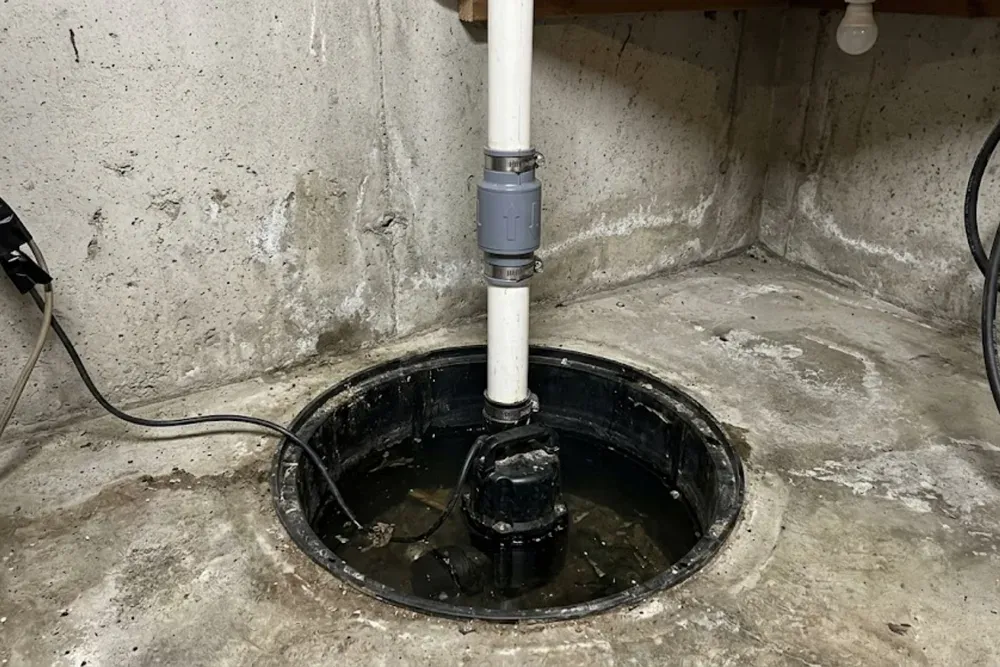
A failed sump pump during a storm is a basement flood waiting to happen
If water is entering the pit faster than the pump can move it, or the pump is silent while the pit fills, act now. Move belongings off the floor, shut off power to affected areas if you can do it dry and safely, and call. If the pump runs but water keeps rising, the pump may be undersized or the discharge line frozen or blocked.
Our 24/7 line takes sump pump calls. Many of them come during snowmelt or heavy rain, when every plumber is busy, so calling early matters. This is a regional topic, and not every Roy basement has a sump pit, so the first question is whether yours does.
Why sump pumps fail when needed most
Most pump failures are predictable.
| Failure | Cause | Fix |
|---|---|---|
| Pump will not start. | Stuck float switch, dead motor or power loss. | Free the float, replace the pump, add a backup. |
| Runs but does not move water. | Clogged impeller or a failed check valve. | Clean the pump or replace the valve. |
| Runs constantly. | High groundwater or a stuck float. | Check the float and the pit size. |
| Discharge line frozen or blocked. | Ice, debris or a crushed line. | Clear and reroute the discharge. |
| Pump is old and noisy. | Wear. | Replace before it fails. |
Most pumps have a service life of several years, so older units deserve an inspection.
Pit filling and the pump is silent?
Move belongings up and call. The line is open 24/7.
How we replace or install a sump pump
A good installation is about more than the pump.
- 1
Assess the pit and the discharge.
The plumber checks the pit size, the discharge path and where the water goes outside.
- 2
Choose the pump.
Pump type and size are matched to the pit and the water volume. A backup option is discussed.
- 3
Install with a check valve.
The new pump is set with a check valve and a secure discharge line that is directed away from the foundation.
- 4
Test under load.
The pit is filled with water to confirm the float works and the discharge is flowing.
Primary pump and backup systems
A single pump is a single point of failure.
Primary pump only
- Simple and lower cost.
- Fails when power is lost.
- Fails if the float sticks.
- Best for low-risk basements.
Primary plus backup
- Battery or water-powered backup runs if the main pump fails.
- Alarm can warn you of high water.
- More components to maintain.
- Better for finished basements.
Groundwater and basements around Roy
Parts of the Wasatch Front valley floor have shallow groundwater, especially near rivers and canals and during spring runoff. Roy sits close to the Weber River and a network of irrigation canals, and some homes see more seepage than others. Whether your home needs a sump pump depends on the lot, the soil and the foundation.
We treat this as a local, hedged topic. We do not know your basement until a plumber has seen it, and we do not claim that basements in Roy are generally wet. If you have a pit, keep it working. If you have seepage but no pit, see basement waterproofing for the options.
Check your sump pump twice a year
A test takes five minutes.
- Pour water in the pit and watch the pump start and stop.
- Clean debris from the pit and the intake.
- Check that the discharge line exits and is not frozen or blocked.
- Test any battery backup and its alarm.
- Consider replacing a pump that has run for many years.
Never block the discharge line or route it into the sewer, which is prohibited in many areas.
What decides the price of a sump pump job
Flood and seepage damage is often excluded from standard policies, so ask about water backup coverage before a storm.
Related water control
If the pit is only part of the problem, basement waterproofing explains drainage options, and a wet spot with no obvious source calls for leak detection. A pump failure that floods a basement may also involve a burst pipe. We take sump calls in West Haven and Roy. Homeowners in Meadow Creek ask about pumps when water shows up after rain.
Questions about sump pump installation and repair
Pour water into the pit until the float rises. The pump should start, empty the pit and shut off. If it does not, call.
It depends on the lot and groundwater. If water collects in the basement or there is a pit already, you likely do. The plumber can look at your situation.
In many areas it cannot. Sump discharge generally goes outdoors, away from the foundation. The plumber checks local rules.
A battery or water-powered backup can keep the pit empty during an outage. We can talk through options when we install.