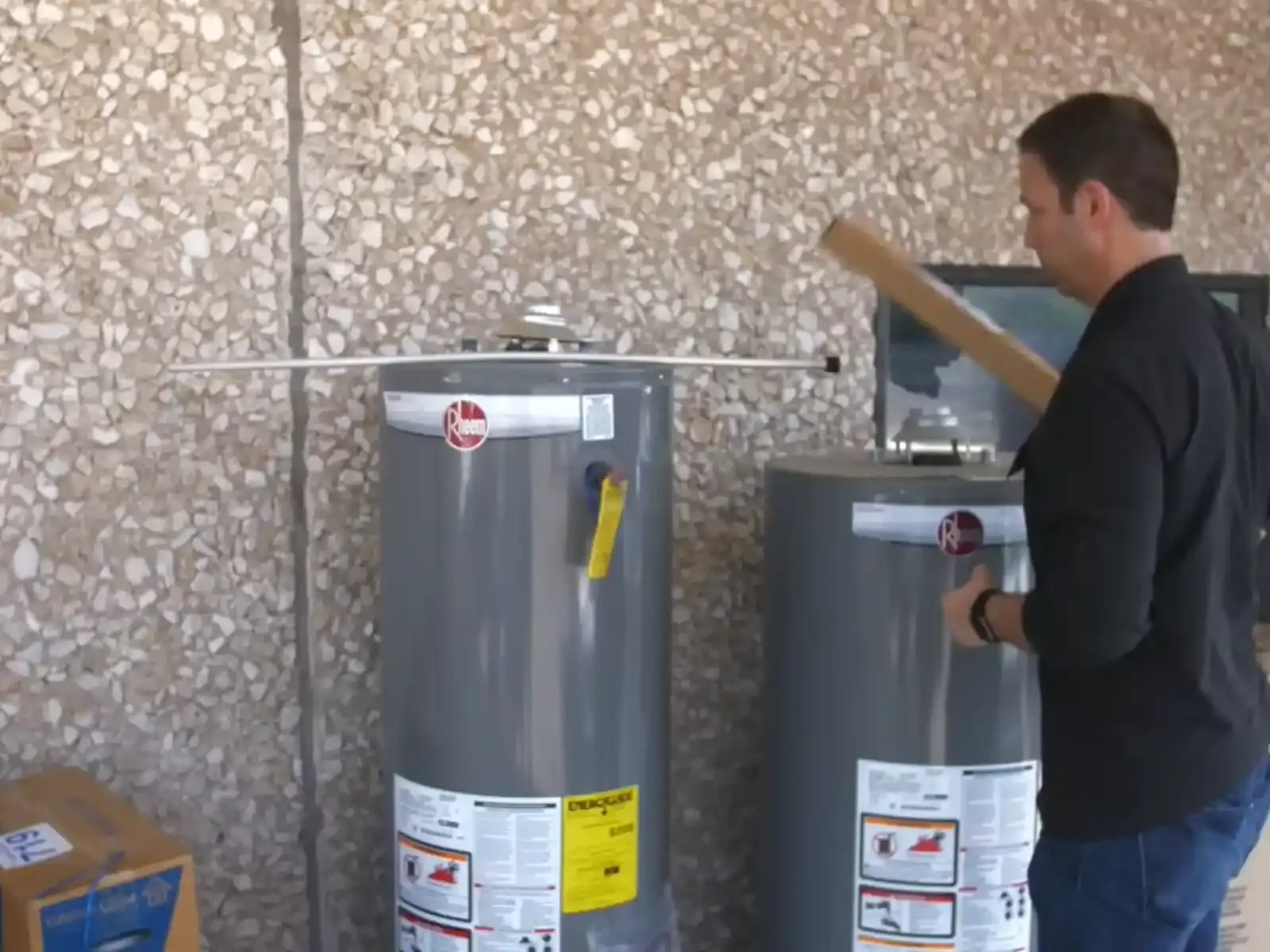
Seven signs your water heater is near the end
Water heaters do not fail without warning most of the time. They give signs, and catching them lets you plan a replacement instead of facing a flood. The signs fall into three groups: age, performance and physical condition.
If your tank is leaking now, shut off the supply and call. For the service, see water heater replacement. For problems that may be repairable, see water heater repair.
What to watch for
Any one of these is a prompt to look closer.
Age near ten to fifteen years.
Many tanks last about that long, though water quality and care change it. The nameplate shows the date.
Rusty hot water.
Rust only on the hot side points to a corroding tank. Rust on both sides points to the pipes.
Rumbling or popping.
Sediment baking on the tank bottom. It lowers efficiency and stresses the tank.
Water at the base.
A weep from a fitting can sometimes be repaired. Water from the tank body means replacement.
Other signs include less hot water than before, a pilot that keeps going out and a relief valve that drips.
How to read the signs
| Sign | Often means | Usual action |
|---|---|---|
| No hot water, tank dry outside. | Failed element, thermostat or pilot. | Repair. |
| Leaking from the tank body. | Tank failure. | Replacement. |
| Rust colored hot water. | Corroding tank. | Inspect, likely replace. |
| Noisy tank, older unit. | Heavy sediment. | Flush if sound, otherwise replace. |
| Frequent repairs. | End of life. | Plan replacement. |
Seeing these signs?
Call and describe what you see. A plumber can tell you what fits.
A five minute inspection
You can do this safely.
- 1
Read the label.
Note the age, the size and the fuel type.
- 2
Look at the base and fittings.
Check for water, rust and mineral crust.
- 3
Check the relief valve.
Look for a drip and make sure a discharge pipe is attached.
- 4
Listen and feel.
Note noises, and whether the tank feels very hot or very cool.
If you smell gas, leave the building and call the gas utility or 911 first.
Why planning beats waiting
A failed tank rarely fails at a convenient moment. It often goes on a holiday or in the middle of the night, with water on the floor. A planned replacement lets you choose the size and type, compare quotes and schedule the work. It also avoids water damage that can cost far more than the heater.
If your heater is old and you are not sure, ask a plumber to inspect it. A short look and an honest answer are worth more than guessing. See water heater installation for planned options.
Gas and electric differences in the warning signs
Gas and electric tanks fail in different ways. A gas unit may show soot, a yellow burner flame or a pilot that keeps going out, which can signal venting or combustion problems and deserves prompt attention. An electric unit may trip a breaker, produce lukewarm water from a failed lower element or show scale on its elements when opened.
Both types corrode from the inside, and both leak at the end of life. A small weep at a fitting may only need a tightened connection, while moisture that appears on the tank jacket or the floor beneath the tank usually means the tank has failed. Take a photograph of the label and the area before calling.
If you are unsure whether the problem is repairable, call and describe it. A plumber can often tell from your description and the age of the unit whether repair is realistic. When it is not, you can plan the replacement before the water arrives on the floor.
What to do while you decide
If you suspect the heater is near the end but it still works, take simple precautions. Place a pan or a leak sensor near the base, know where the cold supply valve is and keep the area clear. Lower the temperature slightly if you have concerns about pressure, and check the relief valve discharge pipe.
Then collect two or three written quotes for the same size and type, so you are ready when the heater fails. Having the information in hand turns a stressful night into a manageable decision.
Roy, UT local note: hard water and pressure
Weber Basin Water Conservancy District reports hardness of 10 to 18 grains per gallon for its supply, and Roy blends that with its own wells per the city's 2024 water plan. Hard water speeds scale buildup and can shorten tank life. The anode rod, which protects the tank from corrosion, is worth checking in an older unit.
The same plan describes delivery pressure of 60 to 90 psi. High pressure adds strain to tank seams and the relief valve, so a heater in a high pressure area may age faster. Ask a plumber to check your pressure. Homes in Riverdale and Clearfield share the same Weber Basin supply.
Questions people ask
Many tank heaters last about ten to fifteen years. Water quality, maintenance and pressure change that.
The serial number on the label often encodes the manufacture date. If you cannot read it, a plumber can.
It is not usually a health emergency, but it signals corrosion. Have the heater inspected.
It can. Weber Basin reports hardness of 10 to 18 grains per gallon for its supply, and scale shortens heater life. Flushing and a softener help.