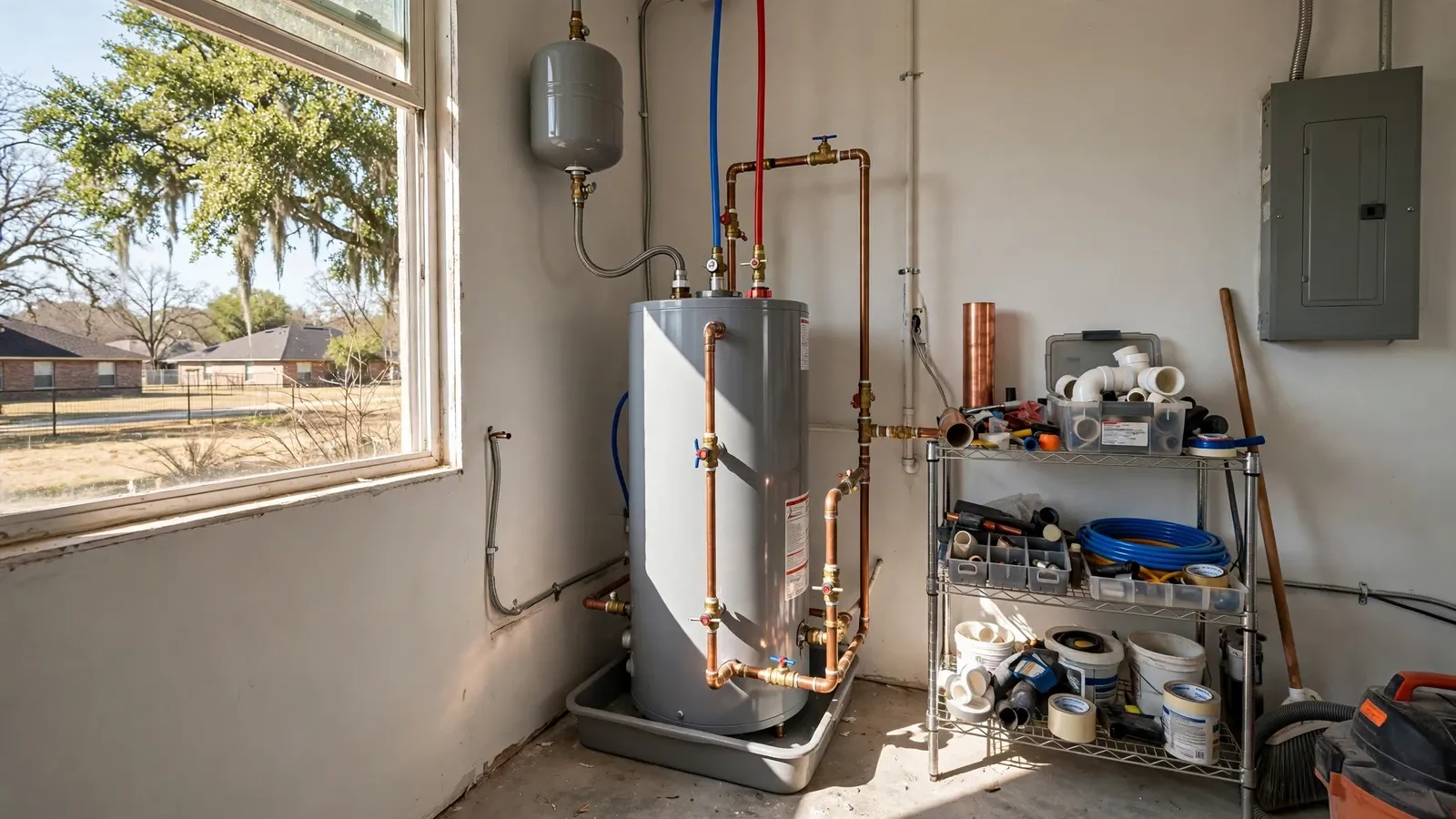
Replace a water heater before it fails
A planned installation is the better way to replace a water heater. You choose the day, you choose the unit, and nothing is flooding. Most tank heaters last about ten to fifteen years, and the age on the label tells you where yours stands. If the heater is approaching that range, scheduling replacement now avoids a failure at a bad moment.
This page is about planned installs. If your water heater is leaking now, see emergency water heater replacement, which our 24/7 line handles.
What a planned water heater installation involves
Planned work lets the details be right.
- 1
Choose the unit.
Fuel type, size, efficiency and location are decided together. The plumber explains the tradeoffs without pushing a model.
- 2
Review the site.
Venting, gas line size, power, drainage and clearances are checked against code.
- 3
Install and connect.
The new unit is set, connected to water, gas or power and vented, with a relief valve and discharge pipe.
- 4
Test and hand over.
The plumber checks combustion, temperature and leaks, and shows you the controls.
Fuel and heater type compared
Your home's existing hookups usually point to the natural choice.
| Type | Best for | Considerations |
|---|---|---|
| Gas tank. | Homes with gas service and venting. | Needs proper venting, lower operating cost in many homes. |
| Electric tank. | Homes without gas, or small spaces. | Needs a suitable circuit, slower recovery. |
| Gas tankless. | High demand, space limits. | Gas line and vent upgrades often needed, see tankless page. |
| Heat pump tank. | Efficiency focus in the right space. | Needs space and air flow, installation differs. |
Ready to schedule an install?
Call and tell us what you have now. A plumber can talk through the options.
Why planned beats emergency
The two paths cost differently in time and stress.
Emergency replacement
- Limited choice of units.
- Water damage risk from the failed tank.
- Decisions made under pressure.
- Often at an inconvenient hour.
Planned installation
- Full choice of size, type and efficiency.
- No leak damage.
- Time to compare the clear prices you are given.
- A schedule that suits you.
What Roy water means for a new installation
Roy City's 2024 water plan reports delivery pressure of 60 to 90 psi. High pressure shortens water heater life and makes expansion tanks and pressure reducing valves a worthwhile part of installation, especially in a closed system with a check valve at the meter.
Weber Basin reports hardness of 10 to 18 grains per gallon for its supply, and Roy blends that with its own wells. Hard water leaves scale in any heater. Ask the plumber about an anode rod, periodic flushing and, if scale is a problem in the house, a softener.
What to do before installation day
Preparation saves time and prevents surprises.
- Read the nameplate on the old unit to note the size and age.
- Clear the area and the path to it.
- Decide whether you want to change fuel type or size.
- Ask about permits and inspection for your address.
- Plan to be home for the walkthrough.
What decides the price of a planned install
Planned replacement is not an insurance matter. Insurance helps only when a failure causes water damage.
Keeping the new heater in good shape
A new water heater benefits from small habits. Set the temperature around 120 degrees Fahrenheit unless the plumber advises otherwise, since higher settings raise scald risk and energy use. Check the base for moisture once a month, and know where the shutoffs are.
Flushing the tank once a year helps in hard water areas, and the anode rod should be inspected periodically. These small steps are the difference between a heater that lasts and one that fails early.
Where we install water heaters
Planned installs happen across Roy and in West Haven, where newer homes often have tankless units, and in Riverdale, where iron and manganese stain fixtures.
Questions about water heater installation
Tank heaters commonly last around ten to fifteen years depending on water quality, maintenance and usage. The nameplate shows the manufacture date.
Water heater installation often requires a permit or inspection under local code. The plumber can tell you what applies to your address.
Often yes, if a gas line and proper venting are available or can be added. The plumber checks what your home has and tells you what would be needed.
It depends on household size, peak demand and recovery rate. The plumber will ask how you use hot water and recommend a size.