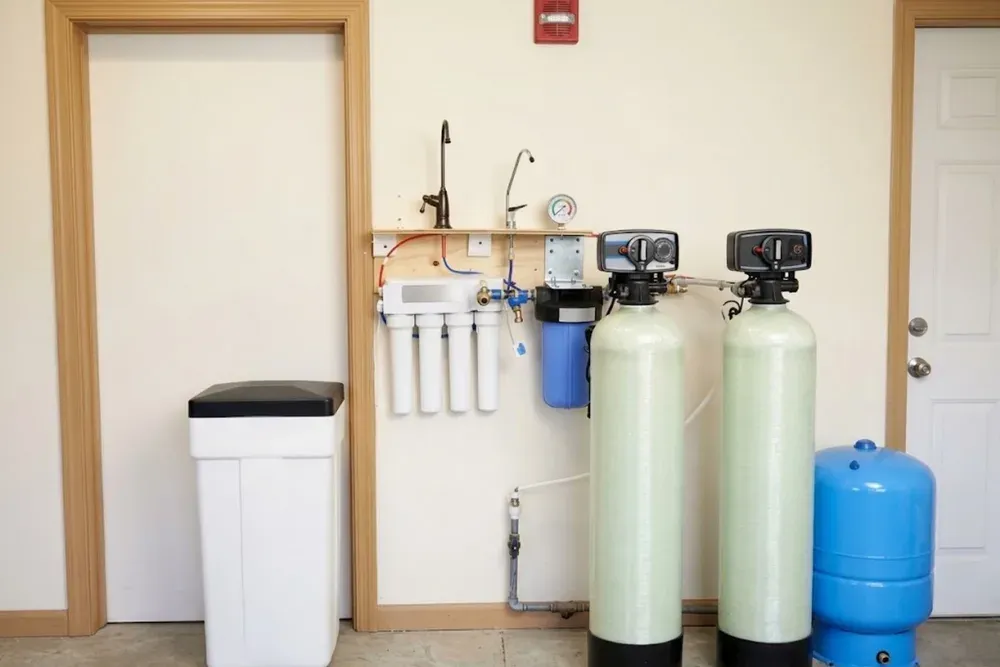
Softeners and filters should be sized to your actual water
A water softener removes the minerals that make water hard. A filter removes other things, such as chlorine taste or sediment. They solve different problems, and buying either without a water test is guesswork. This page explains how to decide, what installation involves and what to avoid.
We do not sell a one-size solution. A sensible plan starts with a test of the water coming into your house, then matches equipment to the result and the household's use.
What hardness numbers mean
Hardness is measured in grains per gallon (gpg) or parts per million.
| Hardness (gpg) | Classification | Typical effects |
|---|---|---|
| Under 1. | Soft. | Little scale. |
| 1 to 3.5. | Slightly hard. | Minor spotting. |
| 3.5 to 7. | Moderately hard. | Scale on fixtures. |
| 7 to 10.5. | Hard. | Scale in heaters, spotting, soap film. |
| Over 10.5. | Very hard. | Heavy scale, shortened appliance life. |
Weber Basin reports 10 to 18 grains per gallon for the water it supplies, which falls in the hard to very hard range.
Scale everywhere?
Call and describe the buildup. A plumber can walk through a test and the options.
How a softener is planned and installed
The plan starts with water, not equipment.
- 1
Test the water.
Hardness, iron and other factors are tested at the tap or main.
- 2
Size the system.
Capacity is matched to hardness and household use so regeneration is not too frequent.
- 3
Install at the main.
The softener is connected to the supply with bypass valves, a drain line for regeneration and an electrical outlet.
- 4
Set and explain.
The plumber sets the hardness level, shows you how to add salt and explains the bypass.
Two different tools
They are often confused.
Water softener
- Removes calcium and magnesium.
- Reduces scale on fixtures and in heaters.
- Uses salt and a drain connection.
- Does not remove chlorine or most contaminants.
Water filter
- Reduces chlorine taste or sediment depending on type.
- Does not soften water.
- Cartridges need replacement.
- Choose based on a specific complaint.
What Roy water looks like
Roy City's 2024 water plan describes a supply made of four city wells plus treated water from the Weber Basin Water Conservancy District, serving roughly 40,000 people. Weber Basin's own water quality report lists hardness of 10 to 18 grains per gallon. Because Roy blends its sources, the hardness at your tap depends on the mix at that time.
We do not state a single Roy hardness number, because the blend changes. Ask Roy City for its current water quality report, and test your own tap with a kit or a lab. Local rules on softener discharge and brine may also apply, so the plumber will check what is allowed before installation. See water heater repair for scale effects on tanks.
Things to weigh before buying
A good decision includes the downsides.
- Salt use and the cost of salt over the years.
- Whether the household has a sodium restriction, since softened water adds sodium.
- Space near the water main and a drain connection.
- Whether you want drinking water softened or only the hot side.
- Regeneration schedule and water use.
What decides the price of a softener or filter
Water treatment is a home improvement and not an insurance matter.
Running a softener day to day
A softener needs salt, and the brine tank should be checked every month or two. Use the salt type the manufacturer recommends, keep the tank from bridging and look at the drain line for clogs. A softener that is neglected stops working without any obvious sign until scale returns.
Plan to have the unit inspected now and then, and test the water after installation to confirm hardness is where you want it. A small test kit is inexpensive and takes a minute.
Water treatment and the rest of the plumbing
Scale shows up first at the water heater, and a tankless unit suffers most. Faucet aerators clog too, which the faucet repair page covers. We install treatment for homes in Layton and around Roy.
Questions about water softener and filtration
Weber Basin reports 10 to 18 grains per gallon for its supply, and Roy blends that with its own wells. The best way to know your number is to test your tap.
If you see scale on fixtures, spots on dishes or a short life for water heaters, a softener may help. The plumber can tell you after a test.
Softened water has a small amount of added sodium, but most people do not notice a salty taste. If sodium is a concern, ask the plumber about a separate drinking water tap.
It reduces scale buildup, which helps. See tankless water heaters for maintenance steps.