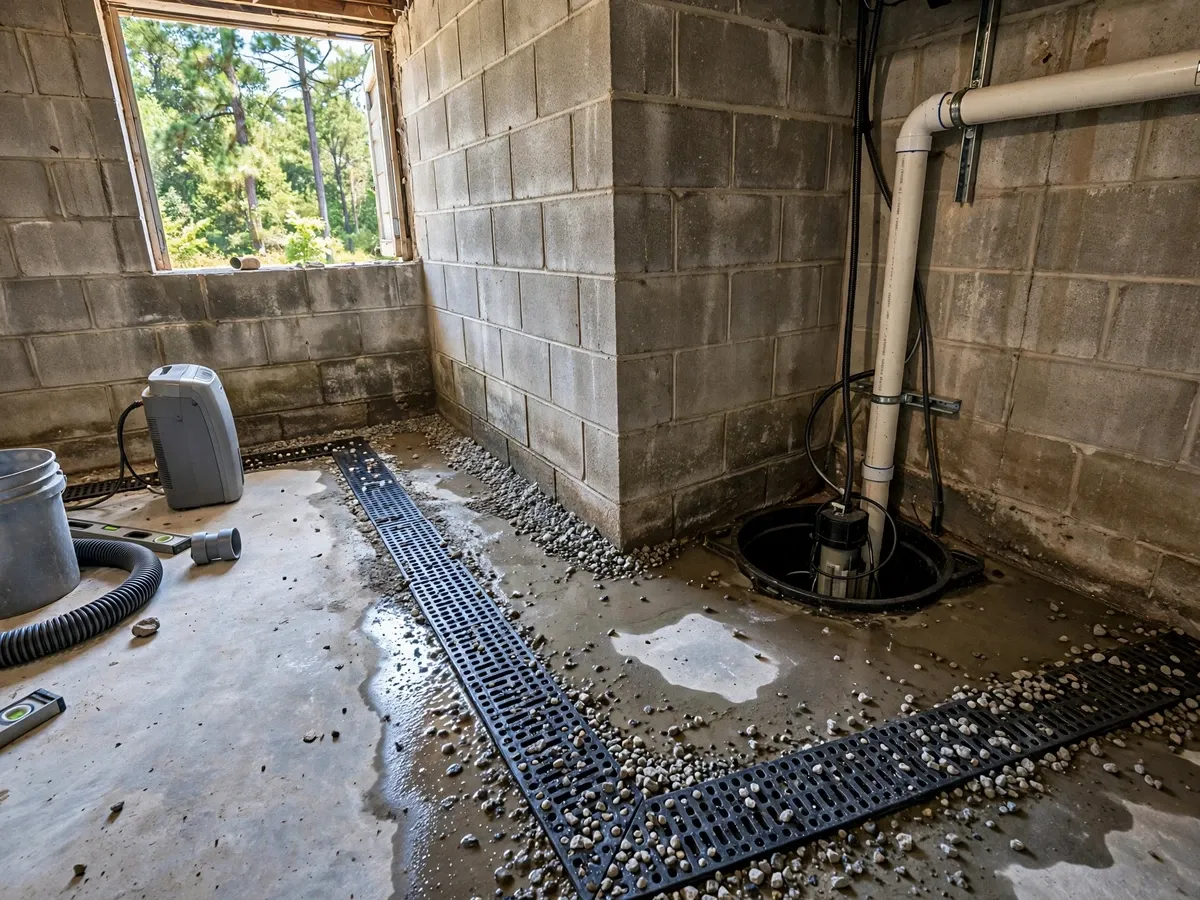
Waterproofing prices vary because the problems vary
A fair price for waterproofing depends on how the water gets in. A basement with a cracked slab and a seep line is a different job from one with a wall leaking at the footing. That is why a quote given without a visit is a guess, and why wide ranges online are not much use.
This guide explains the factors that set the price so you can compare quotes. Not every damp basement needs waterproofing, and some problems are outside a plumber's scope. For our part of the work, see basement waterproofing.
What moves the price of interior waterproofing
| Factor | Why it matters |
|---|---|
| Length of wall drained. | Interior drain is installed along the footing, so more wall means more work. |
| Floor concrete. | Thicker or reinforced concrete takes more effort to cut. |
| Pit and pump. | The pump, the pit and the discharge route add components. |
| Finished walls. | Finished basements need more careful work and restoration. |
| Backup power. | A backup pump adds equipment. |
A fair quote lists these in writing.
How to get a useful quote
A few steps give better comparisons.
- 1
Document the problem.
Photograph the wet spots after rain and note when water appears.
- 2
Check outside first.
Gutters, downspouts and grade often account for a lot of the water.
- 3
Get an inspection, not a pitch.
Ask the contractor to explain where the water comes from and how the system handles it.
- 4
Compare in writing.
Look at scope, equipment, warranty and what happens if the work uncovers something.
Basement damp or seeping?
Call and describe where and when. A plumber can help sort the cause.
Inside against outside
The two approaches solve different problems.
Interior drainage
- Collects water at the footing and sends it to a pump.
- Less disruptive to landscaping.
- Does not stop water from reaching the wall.
- A plumber can handle the drain and pump.
Exterior waterproofing
- Digs down to seal and drain the foundation wall.
- Addresses water before it enters.
- Heavier disruption and cost.
- Usually done by an excavation specialist.
Warning signs in a waterproofing pitch
Be cautious if the contractor offers a price before seeing the basement or promises a perfectly dry basement forever. Ask for the cause of the water and the plan for it. A good contractor explains where the water goes after it is collected and does not dismiss the gutters or the grade.
Ask for the license and insurance and check them. You can verify a Utah plumbing license through the state's online lookup. For pump details, see sump pump service.
What happens after the system is installed
Interior drainage is a system, and a system needs upkeep. The pump should be tested at least twice a year by pouring water into the pit and watching it cycle. The discharge line should be checked for blockage, and any backup battery should be tested. Silt can accumulate in the pit and shorten pump life, so periodic cleaning helps.
Keep records. Photographs of the system, the quote and the warranty are useful if you sell the house, since many buyers ask about past water in the basement and want to see what was done about it. A clear scope on paper also helps if you need to call about a problem.
Finally, do not stop managing water outside. Clean gutters, extended downspouts and a grade that slopes away from the foundation reduce the load on any interior system. Waterproofing works best when the outside and the inside are both doing their part.
What to do if water is entering the basement now
Safety comes before cleanup.
- Stay off wet floors near outlets, appliances and the electrical panel.
- Shut off power at the breaker only if the panel is dry and you can reach it safely.
- Move valuables upward and keep children and pets out.
- Do not wade through standing water if appliances may be energized.
- Call a plumber for pumping and diagnosis, and your insurer if damage is likely.
Timing and seasons
Water problems in basements follow the calendar. Spring snowmelt and heavy rain bring most seepage, and late summer irrigation can add more near the foundation. That makes spring a good time to observe where water enters and fall a good time to schedule work, since contractors are less rushed and soil is easier to dig.
Take photographs and short notes during wet spells. Dates, locations and how much water appeared help a contractor design the system and help you tell later whether it works. A dry basement in a dry month proves little, so record the first big storm after the work is finished.
Roy, UT local note: canals, groundwater and irrigation
Roy lies near the Weber River and the irrigation canals that were first dug in the 1880s, per the Utah History Encyclopedia, which suggests some lots see seasonal groundwater. Roy Water Conservancy District supplies secondary irrigation water, according to the city's water plan. Overwatering near a foundation can mimic groundwater seepage.
We cannot say how wet any specific Roy basement is without seeing it. A good first test is to turn off nearby sprinklers for a week and watch. If water continues, the plumber can look at drainage options. Nearby Riverdale and West Haven sit on flat ground where groundwater can matter.
Questions people ask
It depends on wall length, concrete thickness, the pit and pump, and whether the basement is finished. A written quote after an inspection is the only reliable number.
No. Waterproofing controls water. Mold needs a separate assessment and, if present, remediation.
Sometimes, if the water enters at one wall. A plumber can explain whether partial work makes sense.
Possibly. Roy Water Conservancy District supplies irrigation water, and overwatering near the foundation can soak the wall. Turning sprinklers off near the wall for a week is a cheap test.