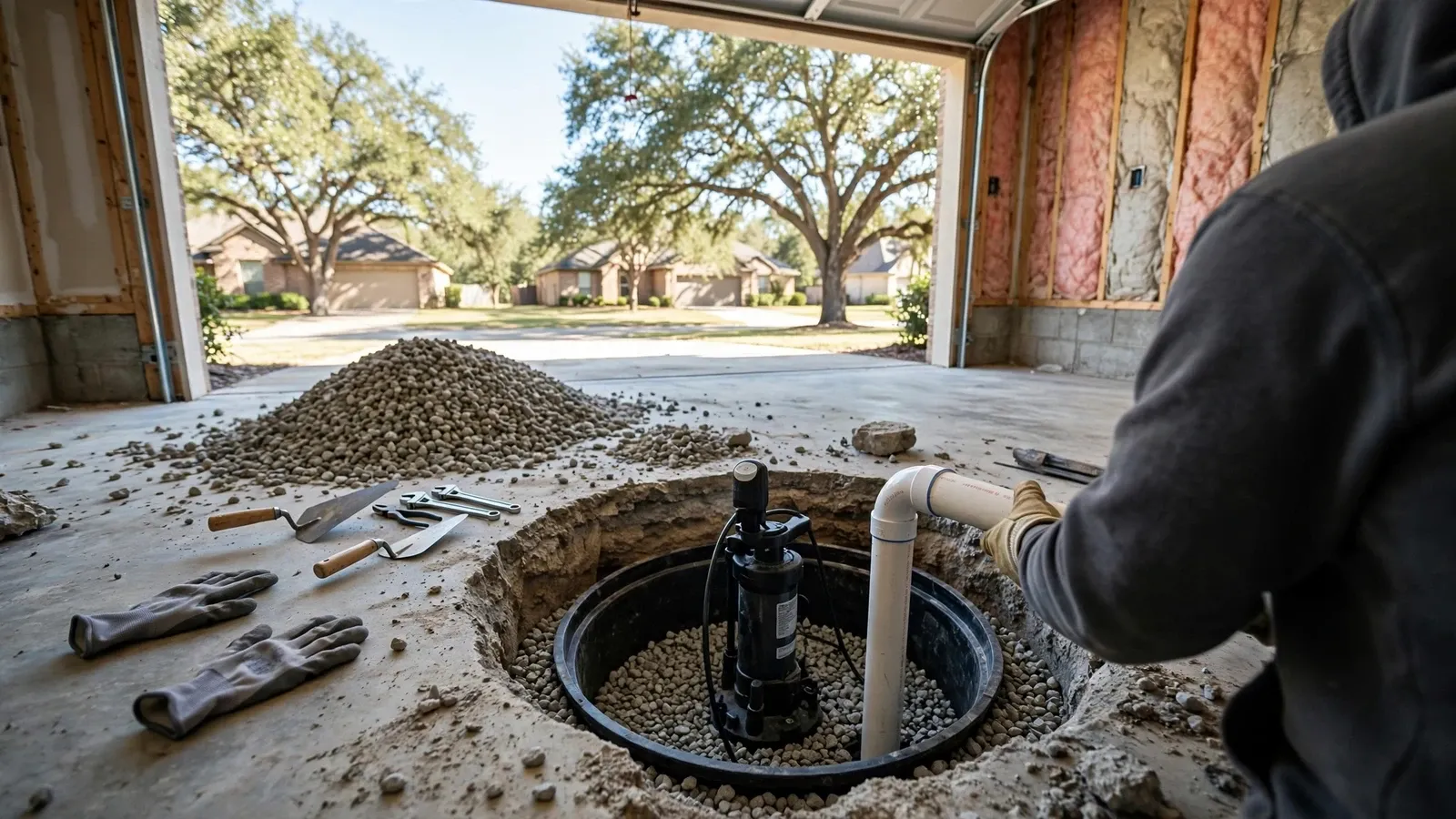
A sump pump in a crawl space is not the same job as in a basement
People search for the cost of a crawl space sump pump because they have found water under the house. The job is different from a basement pit. The space is tight, the digging is by hand and the discharge path has to be planned carefully. Those realities decide the price more than the pump itself.
This guide explains the cost factors and what a good installation includes. If water is already rising and the house is at risk, call the 24/7 line. For the full service, see sump pump installation and repair.
What drives the price of a crawl space sump
| Factor | Why it matters |
|---|---|
| Access. | A tight crawl space slows work and limits equipment. |
| Pit and liner. | Breaking and digging the pit takes labor. |
| Pump type and size. | The right pump depends on how much water arrives. |
| Discharge line. | Length, route and exit point change the work. |
| Backup system. | A battery or water-powered backup adds components. |
| Moisture barrier work. | A vapor barrier may be part of the plan. |
A clear price should follow an inspection of the crawl space.
What a crawl space installation includes
A proper job has more steps than a pump in a bucket.
- 1
Inspect and locate the low point.
The plumber finds where water collects and chooses the pit location.
- 2
Set the pit.
A pit is dug and lined so the pump sits below the water line and silt stays out.
- 3
Install the pump and check valve.
The pump is set on a stable base with a check valve and float.
- 4
Run the discharge.
A discharge line carries water outside and away from the foundation.
Water under the house now?
Call and describe what you see. The 24/7 line is open.
When a pump is the right answer and when it is not
A pump moves water. It does not stop it from entering.
A pump helps when
- Groundwater seeps in at the low point.
- Water pools after heavy rain or snowmelt.
- A pit can collect the water.
- The discharge can leave the property safely.
Fix the outside first when
- Downspouts empty next to the foundation.
- The grade slopes toward the house.
- Sprinklers soak the wall.
- A plumbing leak is the real source.
See basement waterproofing for related drainage choices.
Where the water goes after the pump
A pump is only as good as its discharge. The line should exit outdoors, with enough slope to drain and enough distance from the foundation that the water does not return. In cold weather, a line that ends too close to the house or in a low spot can freeze and back up.
Do not tie the discharge to the sewer line. It overloads the sewer and is not allowed in many areas. The plumber should explain the discharge plan and confirm local rules before installing.
Moisture barriers and the rest of the crawl space
A pump handles liquid water, but crawl spaces also deal with humidity. Damp soil under a house evaporates into the air and can raise moisture in the framing, insulation and ductwork. A heavy plastic vapor barrier over the soil limits that and is often installed together with the pump so the whole space is treated as a system.
If the space has standing water, insulation may be wet and should be checked. Wet fiberglass loses its value and can hold moisture against wood. A plumber is not the right trade for insulation or structural repair, and we say so plainly. We can handle the pit, pump and discharge, and recommend a crawl space specialist for the rest if that is what the inspection shows.
Finally, think about access. A pump that sits at the far end of a crawl space is hard to test and replace. Placing it near the access hatch, where you can see it and reach it, makes yearly testing realistic and keeps the pump working when it is needed.
Roy, UT local note: groundwater and irrigation
Roy sits close to the Weber River and has irrigation canals that date back to the 1880s, according to the Utah History Encyclopedia. That context suggests parts of the area can have higher groundwater, especially during spring runoff, but it does not mean every crawl space is wet. A visit shows what your lot does.
Roy City supplies culinary water, while irrigation water comes from the separate Roy Water Conservancy District, per the city's 2024 plan. Irrigation overflow near a foundation can mimic groundwater, so check sprinklers first. Neighboring West Haven and Riverdale have flat ground where pumps are common.
Questions people ask
Only if water collects there. Standing water, damp insulation or a musty smell are reasons to have it inspected.
The discharge line can freeze if it ends in a low spot or too close to the house. A proper slope and exit reduce the risk.
If water would damage the house during an outage, a battery backup is worth discussing. The plumber explains options and prices.
Possibly. Roy irrigation water is separate from culinary water, and overwatering near a foundation can mimic groundwater. Adjusting sprinklers is a low-cost first test.