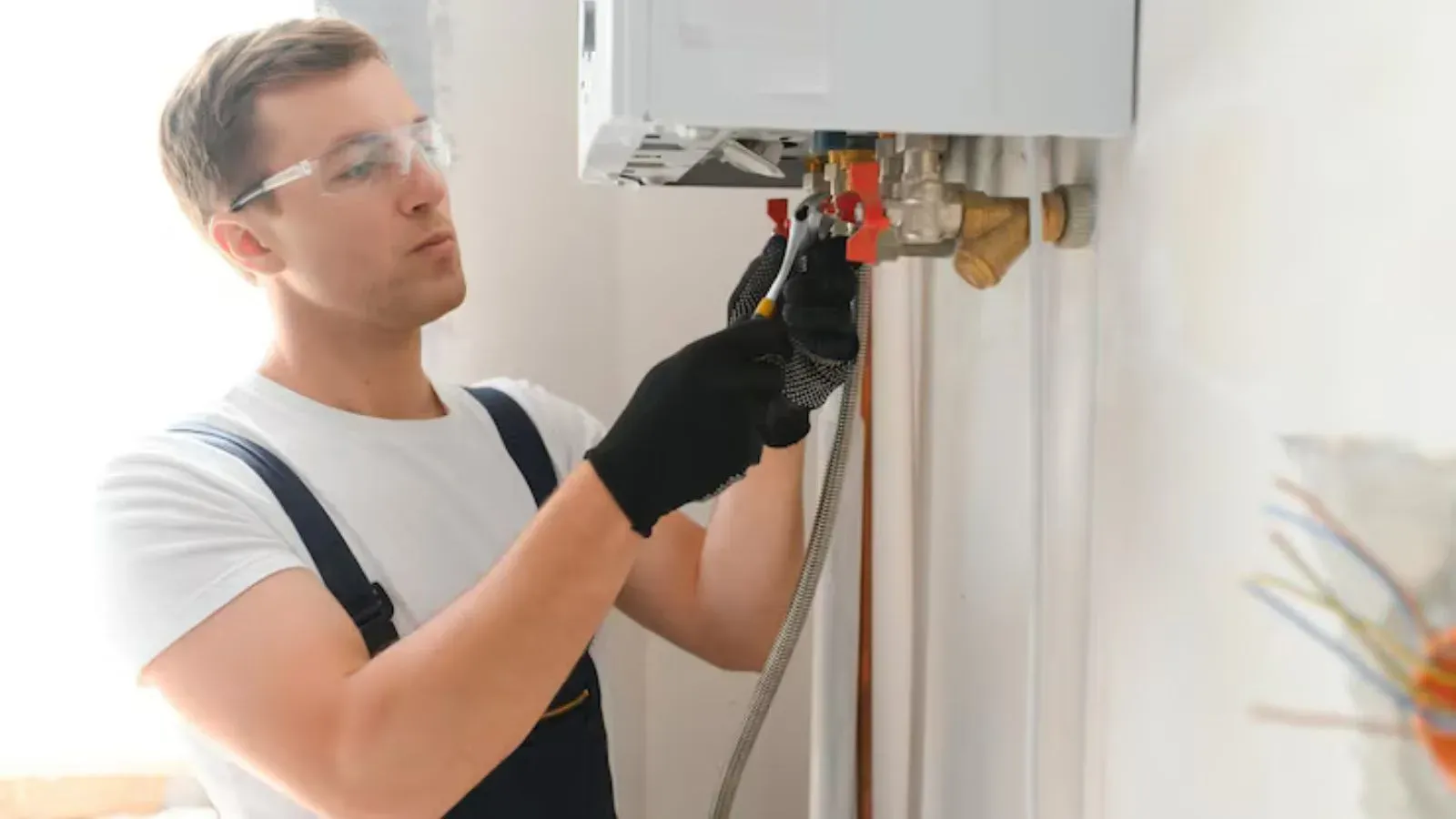
A tankless heater needs maintenance to reach its life expectancy
Tankless water heaters have a reputation for lasting a long time, but that depends on care. The unit heats water as it flows, and every drop passes through a heat exchanger that scale can clog. Without maintenance, the unit may throw error codes, lose output and wear out early.
This guide lists the maintenance tasks, how often to do them and which ones need a plumber. If your tankless unit shows an error code or runs lukewarm, see tankless water heater service.
A maintenance schedule that fits most homes
| Task | How often | Who does it |
|---|---|---|
| Check error codes and temperature. | Monthly. | Homeowner. |
| Clean the inlet water filter. | Every few months. | Homeowner. |
| Flush the heat exchanger with descaling solution. | Yearly in hard water. | Plumber or capable homeowner. |
| Inspect vent and combustion air. | Yearly. | Plumber. |
| Check the condensate drain on condensing units. | Yearly. | Plumber. |
Follow the manufacturer's schedule where it differs.
How a descaling flush works
The flush uses the unit's service valves.
- 1
Shut off power and gas.
The unit is isolated before any work.
- 2
Connect a pump and hoses.
A small pump circulates descaling solution through the unit via the service valves.
- 3
Circulate for the recommended time.
The solution dissolves scale in the heat exchanger.
- 4
Rinse and restore.
The unit is rinsed with clean water, the filter is cleaned and the system is returned to service.
Tankless unit throwing codes?
Note the code and call. A plumber can start the diagnosis today.
Signs the unit needs attention now
Watch for lukewarm water, long delays before hot water arrives, temperature swings, error codes, odd noises from the unit and unexplained gas or energy use. A rumbling sound often signals scale. A shutting down mid-shower points to a flow, vent or sensor problem.
Do not ignore these. A scaled heat exchanger works harder and fails sooner. If you smell gas, leave the building and call the gas utility. For other water heater problems, see water heater repair.
Small habits that protect a tankless heater
A few steps reduce wear.
- Keep the area around the unit clear.
- Keep the vent unobstructed.
- Consider a softener if water is hard.
- Use the correct temperature setting for your needs.
- Keep records of flushes and service.
What a service visit should include
A good annual service on a tankless unit is more than a flush. The plumber reads the stored error codes, checks the temperature and flow readings, cleans the inlet screen and inspects the vent and the combustion air supply. On condensing units, the condensate drain and neutralizer are checked, because a blocked drain can shut the unit down.
The plumber also looks at the gas connection and the burner or flame, checks the pressure relief on the system and confirms that the unit fires cleanly across its range. Any unusual sounds, vibrations or odors are noted.
Ask for a short report after the visit. It should say what was found, what was done and what to watch for next time. Keep it with the manual. That record helps with warranty claims and shows the next plumber what has been tried.
Records worth keeping
Keep a simple log with the date of each flush, the product used, the error codes seen and any parts replaced. A log makes it easy to see patterns, such as codes that appear every winter or after the same kind of heavy use, and it helps a plumber diagnose faster.
Keep the manual, the installation date and the warranty registration in one folder. Many tankless warranties require proof of maintenance, so receipts and notes can matter later. A photograph of the unit label stored on your phone is a free backup.
If you sell the house, hand the log to the buyer. A documented history of flushes and service is a real selling point for a tankless unit, and it shows the next owner how the heater has been treated over the years it has been running.
Roy, UT local note: hard water and flushing
Weber Basin Water Conservancy District reports hardness of 10 to 18 grains per gallon for its supply in its 2024 water quality report, and Roy blends that with its own wells according to the city's water plan. In a tankless unit, that means scale is a real maintenance issue, not a theory. Ask Roy City for its current water quality report to see what your tap gets.
Many manufacturers recommend yearly flushing in hard water areas. A softener can reduce how often you need it. See water softener and filtration. Our dispatch covers West Haven and Ogden as well, where newer homes often have tankless units.
Questions people ask
Many makers recommend once a year in hard water. Your manual gives the schedule for your model.
Many homeowners do with a pump kit and the service valves. If you are unsure about the gas and power isolation, a plumber is safer.
It depends on the maker. Codes often point to flow, ignition, venting or scale. Write the code down and tell the plumber.
Weber Basin reports hardness of 10 to 18 grains per gallon, and Roy blends sources. Scale builds in the heat exchanger, so a flush schedule matters.